|
|
| |
Hello, fellow photographers. When I put together Today in Photography, I’m sometimes surprised to find a common thread in what I share, even when I haven’t set out with a theme in mind. |
This week, that thread turned out to be perspective. It’s something I try to stay very conscious of when taking photos, and something I harp on when teaching my students, too. After all, it can be a powerful tool to help others see the world in a fresh way. |
But even when we know that, it’s easy to get a little complacent, especially when we’re photographing familiar subjects rather than something new and exciting. I know I can slip into raising the camera to eye level, finding a composition and moving on without asking what another viewpoint might reveal. |
So this week, I’m challenging myself – and you all – to make a photograph from a position you wouldn’t normally choose. Get low, find a higher vantage point or move around a familiar subject before settling on a frame. You may not come away with a better photograph, but you might see something you would otherwise have missed. |
If you create anything that surprises or excites you, send it my way! I’d love to see your fresh perspectives. |
— Abby Ferguson, Features Editor |
|
|
|
|
|
|
|
|
|
|
| |
Posts That Stopped the Scroll |
|
| |
|
|
|
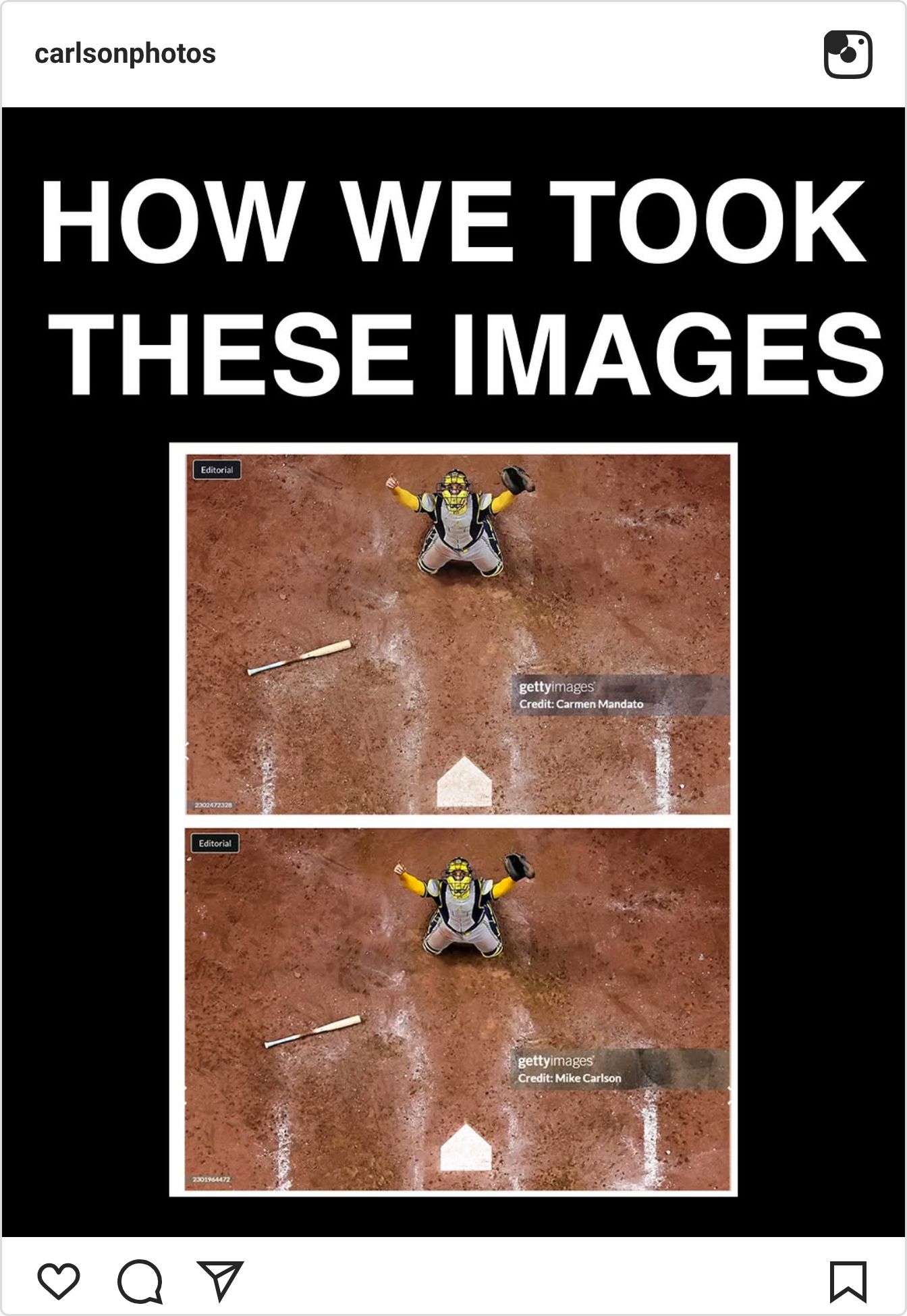
My feed has been pretty full of images from the Major League Baseball World Series, including the two below (taken by two different photographers). Even if you don’t like baseball, this is an interesting post to check out, since it walks through how they took these overhead shots. It’s a neat glimpse behind the scenes at a major sporting event. |
|
|
|
|
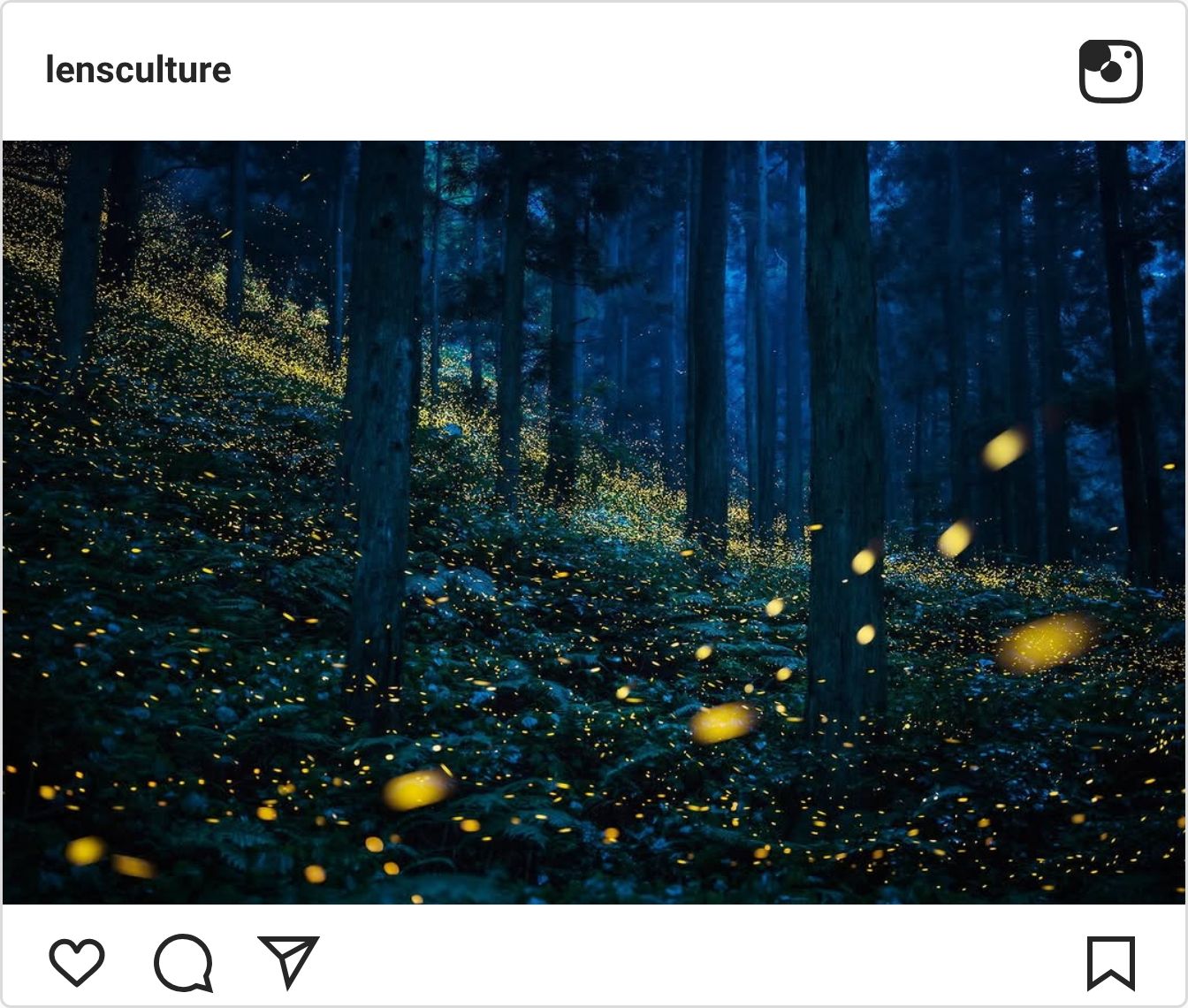
Sometimes, it’s nice to just share cool images with you all. Such is the case with the images below, from Kazuaki Koseki’s Hotarubi, which recently won the LensCulture Photobook Prize 2026. They are absolutely spectacular, so be sure to head to the post to see more. |
|
|
|
|
|
|
I wrapped up my review of the Canon EOS R6 V this week, which is essentially just an EOS R6 III with the EVF and mechanical shutter replaced with a fan and a more video-focused control layout. Canon is just the latest in a line of manufacturers adapting their hybrid mirrorless cameras, which are already astoundingly capable at shooting video, into dedicated video cameras. But why are people buying them, when you can get essentially the same features in a camera that also happens to be one of the best stills options on the market? |
To start with the obvious: cost. The enthusiast video options typically cost hundreds of dollars less than their hybrid counterparts. If you don't care too much about shooting stills, and don't think you ever will, you can funnel those savings into lenses, lights, mics, grip gear, or any one of the plethora of accessories required for video. |
Even setting savings aside, there's something special about shooting with a camera that, by default, puts all the video settings you need at your fingertips. Sure, you can remap the buttons on a Z6III to give you immediate access to your white balance settings, but with the ZR, you don't have to (and you won't end up with a button whose icon doesn't match its function). |
Finally, while the video-focused models often have the same base capabilities as their hybrid counterparts, they still often include some special sauce. The Panasonic S9 expanded the company's real-time LUT system, the Nikon ZR comes with a new Raw video format that gives you cine EI exposure, and the EOS R6 V has a fan to avoid overheating when recording in open gate or oversampled 4K/60. And they all have more gimbal-friendly designs. |
Of course, if you shoot stills just as often as you shoot video, it might still make sense to go with the hybrid options. Realistically, that's what I'd do if I had to buy a camera today, even as a video enthusiast. But I also understand why companies continue to make this kind of camera, and why demand for them doesn't seem to be going away. |
|
|
|
|
|
|
 |
Photo by Richard Butler |
|
|
| |
|
In case you missed it, a few weeks ago Sigma released the FP2, the world’s smallest full-frame interchangeable lens camera. Richard Butler has been hard at work putting the new camera to the test, despite Seattle’s gloomy fall weather. Stay tuned to learn more about his impressions. |
| |
Important Dates in Photo History |
|
| |
|
|
|
October 30 – John G. Zimmerman's birthday (b. 1927). The American sports photographer pioneered remote-controlled cameras, inventive camera placements and electronic lighting techniques. His photographs brought readers closer to the action, including views of basketball from above the rim. October 30 – Mario Testino's birthday (b. 1954). The Peruvian-born fashion and portrait photographer became known for his work for Vogue, Vanity Fair and major fashion houses. His 1997 portraits of Princess Diana brought him wider recognition, and he later took Prince William and Catherine Middleton’s engagement portraits. October 31 – Helmut Newton's birthday (b. 1920). The Berlin-born photographer became one of fashion photography’s most influential and provocative figures. His erotically charged black-and-white photographs were a mainstay of Vogue and helped shape the visual language of fashion advertising and editorial photography. November 1, 1941 – Ansel Adams made “Moonrise, Hernandez, New Mexico.” Driving back to Santa Fe, he stopped to photograph the moon above a village and its sunlit cemetery. With the light fading, he calculated his exposure using the moon’s luminance, creating what became his best-known photograph.
|
|
|
|
|
|
|
We recently started a new mini challenge with a theme of eerie liminal spaces, inspired by the movie ‘Backrooms.’ Head on over to the article's comment section to see some of the images shared, or share your own (as long as they were taken on or after October 25, in the spirit of the challenge). |
|
| |
|
|
|
 |
Photo by Andrew Keithly |
|
|
| |
|
I’ve always been inspired by architectural photos, so I really enjoyed the most recent installment of our ‘What’s in your bag?’ series, featuring architectural photographer and community member Andrew Keithly. This particular image stopped me in my tracks because of the lighting. I also appreciated Andrew’s mindset about slowing down and taking time to truly notice what’s around you. Be sure to go read the full feature and enjoy even more images. |
|
|
|
|
| |
“Spend more money on travel, or on that dream class or mentorship, and less on gear. Gear is genuinely helpful, but it doesn’t make you a good photographer or bring a sense of fulfillment.” |
ANDREW KEITHLY, PHOTOGRAPHER AND DPREVIEW COMMUNITY MEMBER |
|
| |
|
|
|
|




No comments:
Post a Comment